|
|
UN Bag |
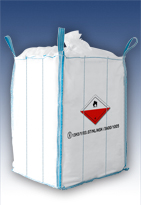 The transport of dangerous goods is regulated in order to prevent injury to people, harm to the environment and material damages. MSN AMBALAJ has trained staff and advanced technical equipment to design and produce quality UN FIBCs according to international regulations for transport by sea, rail and road. Our technicians are well trained in the procedures and regulations regarding transportation of dangerous goods. The transport of dangerous goods is regulated in order to prevent injury to people, harm to the environment and material damages. MSN AMBALAJ has trained staff and advanced technical equipment to design and produce quality UN FIBCs according to international regulations for transport by sea, rail and road. Our technicians are well trained in the procedures and regulations regarding transportation of dangerous goods.
MSN AMBALAJ UN FIBCs are tested with Safe Working Loads (SWL) ranging from 500 kg to 2000 kg.
UN REGULATIONS
The UN recommendations on the transport of dangerous goods (Orange Book)
| IMDG Code |
Chapter 6.5 |
Transport by sea |
| ADR |
Annex A 6 |
Transport by road |
| RID |
Annex A VI |
Transport by rail |
 |
These legislations determine the type of goods and maximum quantities that may be transported, the container’s characteristics and required standardisations, the means of transport, the proper training of the persons intervening, the labelling, the necessary documentation and the mandatory safety conditions. Any chemical and compound element which present a health, security or environmental risk are considered dangerous substances. Technically considered as such are those substances and preparations containing these chemical or compound elements listed under Annexe I of the Directive 67/548/CE . |
| |
|
 |
In regard to asbestos, both transportation and treatment of its residue must be carried out in accordance with the regulations in force (Law 10/98 of Residues, BOE 96 – Official State Bulletin).The RD 1406/1989 (BOE 278) regarding marketing limitations and the use of certain substances and preparations, demands that all products or containers containing asbestos, must be properly labelled in accordance with the special dispositions indicated for such purposes under Annexe II |
UN CODE FOR TYPE OF FIBC
13 |
Flexible IBC for solids, filled or discharged by gravity (liquids and solids under pressure [>0.1 bar] are not permitted) |
H1 |
Woven PP fabric without coating or inner liner |
H2 |
Woven PP fabric, coated |
H3 |
Woven PP fabric with inner liner |
H4 |
Woven PP fabric, coated and with inner liner |
Y |
Flexible IBC approved for packaging groups II and III |
Z |
Flexible IBC approved for packaging groups III |
Packaging Group
Which packing group shall become certified? (Note I Includes II and III, II Includes III).
There are three packing groups for dangerous goods. The test procedures mentioned in item 2 differ in the drop height as follows. |
degree of danger |
packing group |
drop height |
UN-symbol |
max. volume |
high |
I |
1.80m |
X |
1.5m3 |
medium |
II |
1.20m |
Y |
3.0m3 |
low |
III |
0.80m |
Z |
3.0m3 |
|
|
|
|
Class 4.1 |
Class 4.2 |
Class 4.3 |
Class 5.1 |
Flammable Solids, self reactive substances and desensitized explosives |
Substances liable to spontaneous combustion |
Substances which, in contact with water, emit flammable gases
Substances which, in contact with water, emit flammable gases |
Oxidizing substances |
|
|
|
|
Class 5.2 |
Class 6.1 |
Class 8 |
Class 9 |
Organic peroxides |
Toxic substances |
Corrosive substances |
Miscellaneous dangerous substances and articles |
The use of Flexible IBCs for dangerous goods of the above classes is only permitted in accordance with the UN recommendations (Orange Book) and the regulations of the IMDG Code for transport by sea, ADR for transport by road and RID for transport by rail.
|
|






 big
bags
big
bags 


